We arrived in Antwerp to a beautiful sunny day – good walking weather.
The city tour was nice and, of course, we learned a lot of the history, much of which I have already forgotten.
There are still a few sections of the old city wall but mostly destroyed. Some old buildings remain. This is a major shipping port and hence was heavily bombed in the war.
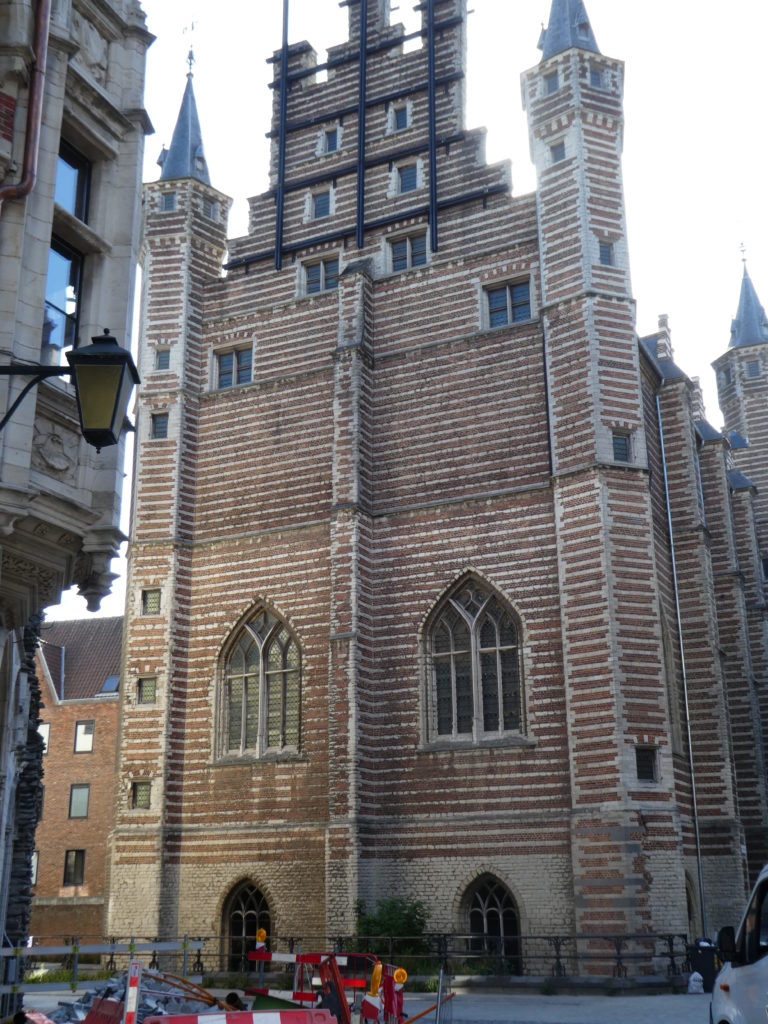
One interesting building which looks a bit like a church, is the Guildhall (pictured below), which was the location of the town butcheries. There were 67 butchers in the town and the only way to become a butcher was to be born to it or married into it. Slaughtering was done outside and the carcasses taken in where they were prepared for sale. This was the only place where you could buy meat.
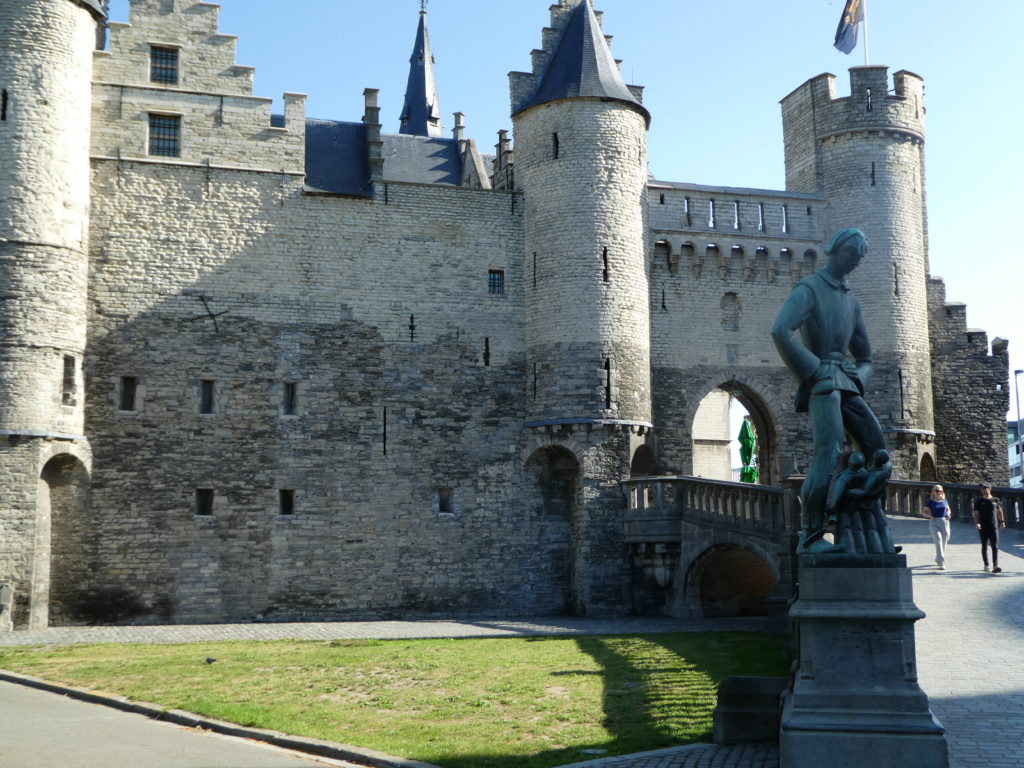
Another prominent building/structure was Het Steen. In the 9th century, a walled settlement was built, which developed into a fortress. A stone wall replaced the earthen wall, probably in the 11th century. Against that wall, next to the castle gate, a rectangular building was erected which is still evident in the foundations of Het Steen.
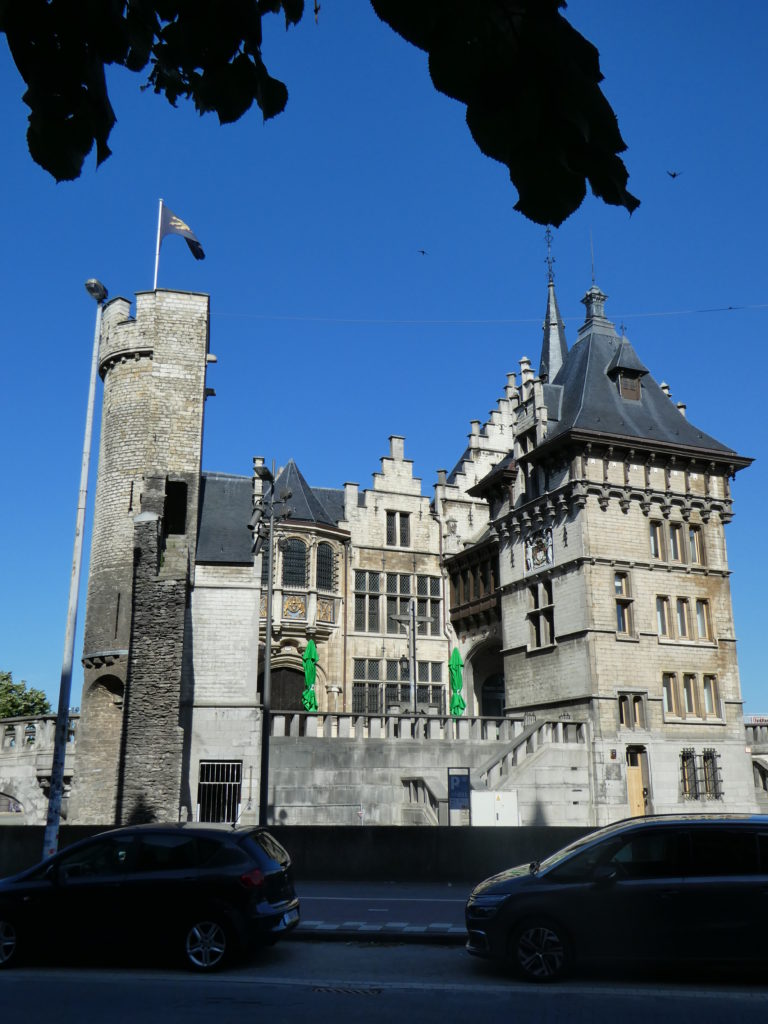
Adjacent to this structure and attached is a building which is now a very large house but used to be a prison. People found guilty of crimes were beheaded here. Women were drowned in cages because the men did not want to see women’s blood.
The river is tidal here and can rise 6 to 8 metres depending on the tide. A wall was constructed many years ago to stop the city from flooding but sometimes the water goes over the top. The city has a canal system, much like Venice except that it was converted to water tunnels back when Antwerp was wealthy and now is completely covered. Tours of the tunnels are available.
Antwerp is also the world’s largest trading centre for Diamonds. It is equally famous for Belgian lace, chocolates and beer.